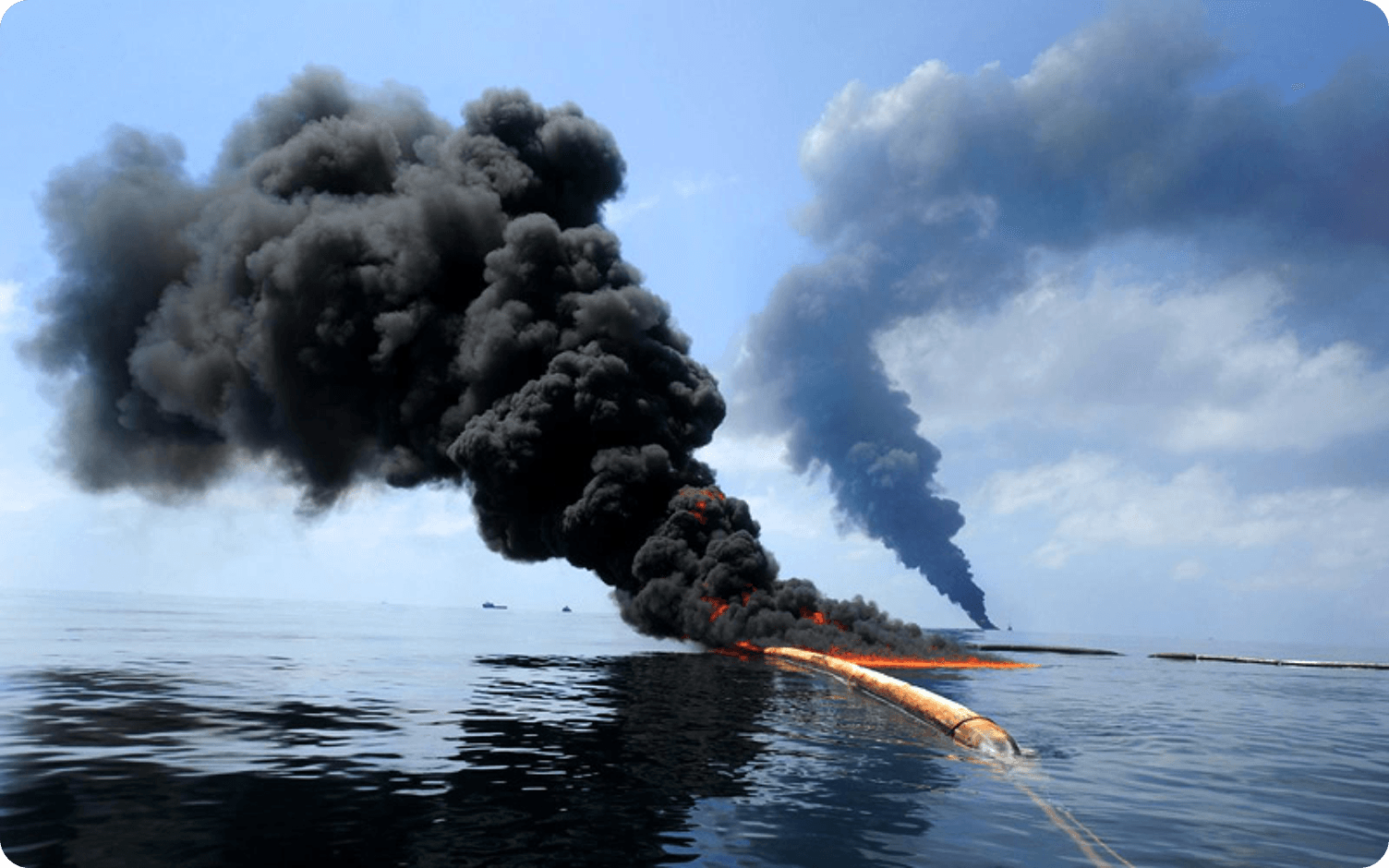
Southern Sea at Stake: Communities Rally to Stop Offshore Drilling Now
Written by Surfrider Foundation Australia
Your voice can shift outcomes—join us to protect the ocean we love.
Stop offshore drilling.
Summary
Scale and precedent: The 2025 Otway Basin release reopens ~2.5 million hectares of Southern Ocean waters previously rejected for large-scale offshore exploration.
Marine ecosystem risk: Seismic blasting is scientifically linked to whale disturbance, plankton mortality, and cascading impacts across marine food webs and fisheries.
Climate inconsistency: New offshore gas exploration conflicts with Australia's emissions-reduction goals.
Community and economic exposure: The proposal places coastal communities, First Nations Sea Country, and local economies at risk while privileging industry timelines over public scrutiny.
The Australian Government’s decision to open roughly 2.5 million hectares of the Southern Ocean to offshore gas exploration under the 2025 Otway Basin acreage release is not just another policy choice. It directly challenges communities that have already said, loudly and clearly, that this ocean is not for sale. A single spill could travel thousands of kilometres, choking marine reserves and coastal towns. These waters are places of memory and meaning—where people learn to swim, surfers greet the sunrise, fishers work, and families build their lives. They shelter whales, vibrant reef ecosystems, and coastal economies that rely on a healthy ocean to survive.
Surfrider Foundation Australia stands with communities in opposing this acreage release and calls for an end to all new offshore oil and gas exploration in the Southern Ocean. This is no longer just about stopping one project; it is about drawing a line, protecting a living ocean, and honouring our responsibility to future generations who deserve a Southern Ocean that is alive, thriving, and free from industrial harm.
A Line Already Crossed
This acreage release closely mirrors the previously rejected 7.7 million hectare seismic blasting proposal put forward by multinational company TGS, which would have been the largest seismic survey ever proposed in the world.
That proposal was stopped in late 2024, through relentless community efforts, scientific scrutiny and more than 30,000 public submissions. It followed the footsteps of the Fight for the Bight victory in 2019, when the nation came together to stop offshore drilling in the Great Australian Bight. These were not flukes. They were expressions of a deep and shared love for the Southern Ocean and healthy coastal ecosystems.
The current release reopens waters communities believed were already protected, forcing them to defend the same ocean again just 14 months later.
Surfrider Foundation Australia The 2025 Otway Basin Release includes five exploration titles, two off Victoria covering around 1.6 million hectares and three off Tasmania covering approximately 800,000 hectares, stretching across some of Australia’s most ecologically and culturally significant waters.
The current release effectively reopens the Victorian and Tasmanian sections of that same ocean, leaving communities in the unacceptable position of having to defend waters they believed were safe just 14 months ago.
The Government has given the community just six weeks to respond, over the busiest season of the year, with submissions closing on 6 February, while industry has until June to prepare bids. For coastal folks, this imbalance reinforces a deep sense that decisions about their oceans are being made without us, despite the long-term environmental and economic consequences we will live with.
Why this Acreage Release Doesn’t Make Sense
What makes this latest decision so frustrating is the distorted narrative that we need more gas for the domestic market. When 80% of Australia’s gas is exported and domestic demand peaked years ago and is now in rapid decline, it just doesn’t stack up.
Fossil fuel corporations continue to reap massive profits by pushing new fields, new exploration and new risks for our oceans under the guise of energy security. Much of this gas is instead shipped overseas delivering enormous profits for multinational energy companies while environmental costs are dumped on coastal communities at home.
Whale Nurseries Under Threat from Seismic Blasting
Marine scientists warn that seismic airgun blasts used to map oil reserves can disorient whales, dolphins, and fish, disrupting breeding and feeding patterns for months. Nearby Southern Right Whale nurseries, still recovering from historical whaling, would be subjected to industrial noise at levels known to cause stress and strandings.
Seismic blasting is the first destructive step in offshore oil and gas exploration and the gateway to drilling and extraction. It involves firing high-intensity airguns into the ocean every 10 to 15 seconds, often around the clock, for weeks or months at a time.
Scientific evidence shows
Seismic blasts can exceed 250 decibels (as loud as an atomic bomb), with sound travelling hundreds or thousands of kilometres underwater.
Marine mammals such as whales and dolphins, which rely on sound to navigate, can suffer hearing damage, behavioural disruption and displacement from their natural habitat.
Zooplankton and krill, the foundation of the marine food web, can be killed more than one kilometre from blast sites.
These impacts cascade through entire ecosystems, disrupting reefs, fisheries and coastal food chains.
Coastal Communities and Climate
The expansion of offshore gas in the Southern Ocean directly contradicts climate science and Australia’s own emissions goals. New gas production would pump millions of tonnes of CO₂ into the atmosphere, worsening marine heatwaves and coral bleaching. Damaging the Southern Ocean also limits its ability to trap and store carbon - one of Earth's natural defences against global warming.
Expanding offshore gas in the Southern Ocean contradicts climate science, undermines Australia’s emissions goals, and weakens one of Earth’s most important carbon sinks.
Surfrider Foundation Australia This proposed acreage release poses a significant threat to existing coastal economies and communities, particularly those dependent on the Great Southern Reef, which alone contributes over $11 billion annually to the Australian economy. First Nations custodians have serious concerns, pointing to impacts on Sea Country and Whale Songlines that stretch across the region.
To distract from this reality, the oil industry frames exploration as a jobs engine, yet the numbers tell another story. Clean energy already employs more Australians than oil and gas extraction, and the renewables sector is growing significantly faster than the fossil fuel industry. Persisting with offshore drilling locks Australia into stranded assets while crowding out investment in wind, solar, and grid upgrades that create lasting regional employment.
Take Action
Together as a community, we stopped fossil fuel exploration in the Great Australian Bight and along Australia’s eastern coast with PEP11. In 2025, communities succeeded again in holding back the world’s largest seismic blasting proposal from destroying the Southern Ocean. Now, we can succeed again!
Join us in calling on the Australian Government to protect coastal communities and marine ecosystems. Your voice will help make a difference, and our submission-writing tool makes it easy to have your say in under five minutes.